
Access Control Systems
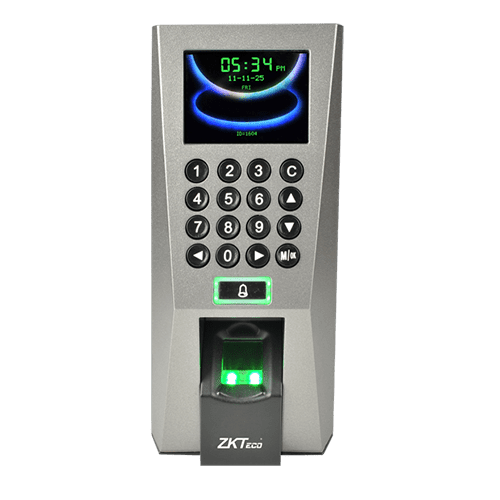
ZKTeco F18 Biometric Fingerprint access control
KSh 14,000
KSh 300 delivery anywhere in Kenya · Cash on delivery
A priced parts list for one access-controlled door, with what each part does, where you can save, and how to keep the door safe for people to get out.
By Giga Team Solutions · Updated · 8 min read
A one-door access control system in Kenya, built from a fingerprint and card reader, a magnetic lock, an exit button, an emergency break glass, a battery-ready power supply and a door closer, comes to KSh 27,850 in parts from our shop using the list below. That covers the hardware for a single office, server room, store or staff entrance. It does not include the standby battery, a mounting bracket if your door needs one, or installation labour, which is quoted after we have seen the door.
Below is each part, what it costs, where you can save, and the two things people most often get wrong: what a magnetic lock does when the power goes off, and how people get out in an emergency.
Every access-controlled door has to do five jobs: identify the person, hold the door shut, let people out from the inside, release the door in an emergency, and stay powered. The parts map onto those jobs.
These are our current shop prices. Each item links to its full specifications.
| Item | Qty | Unit price | Line total |
|---|---|---|---|
| ZKTeco F18 fingerprint and card reader | 1 | KSh 14,000 | KSh 14,000 |
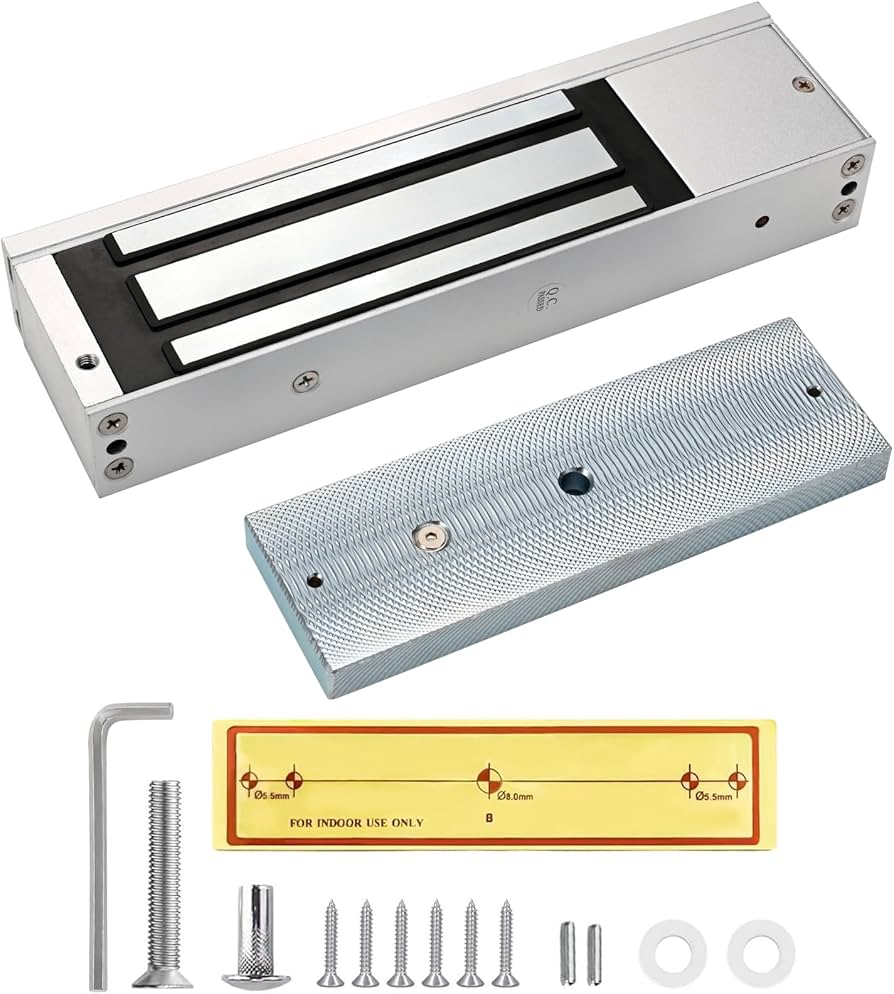
| Magnetic lock, 280 kg, 12 V | 1 | KSh 2,000 | KSh 2,000 |
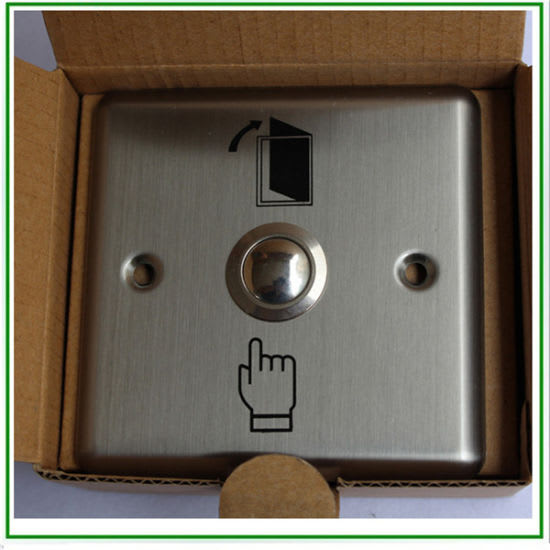
| Metallic exit button | 1 | KSh 900 | KSh 900 |
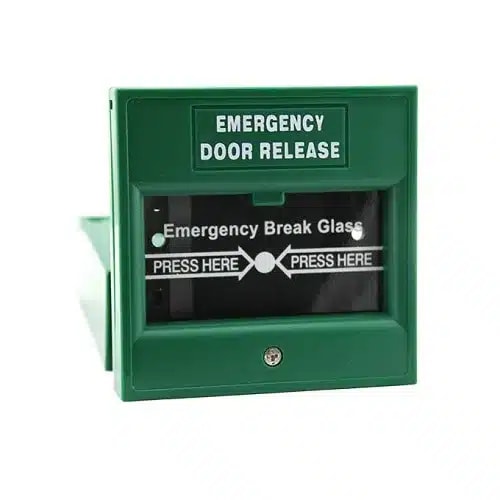
| Emergency break glass | 1 | KSh 1,000 | KSh 1,000 |
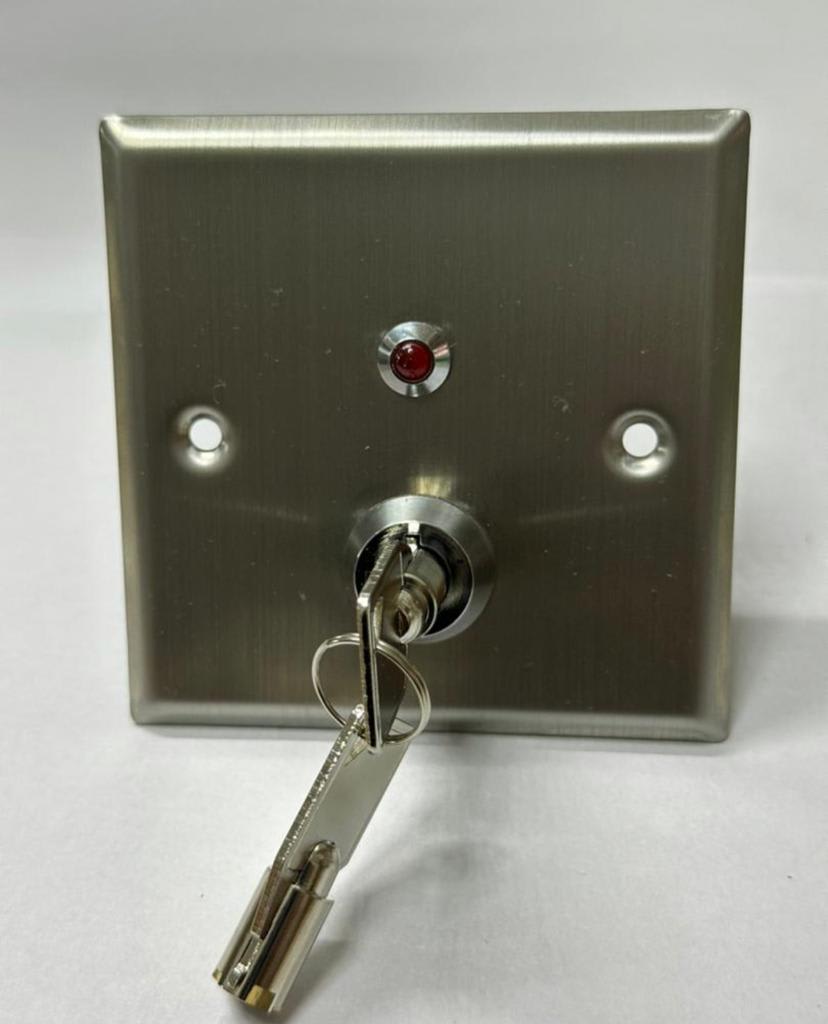
| Override key switch | 1 | KSh 1,300 | KSh 1,300 |
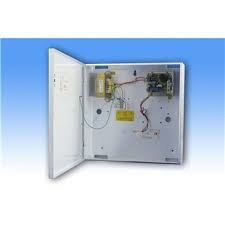
| 12 V 1 A boxed power supply (takes a 7 Ah battery) | 1 | KSh 4,500 | KSh 4,500 |
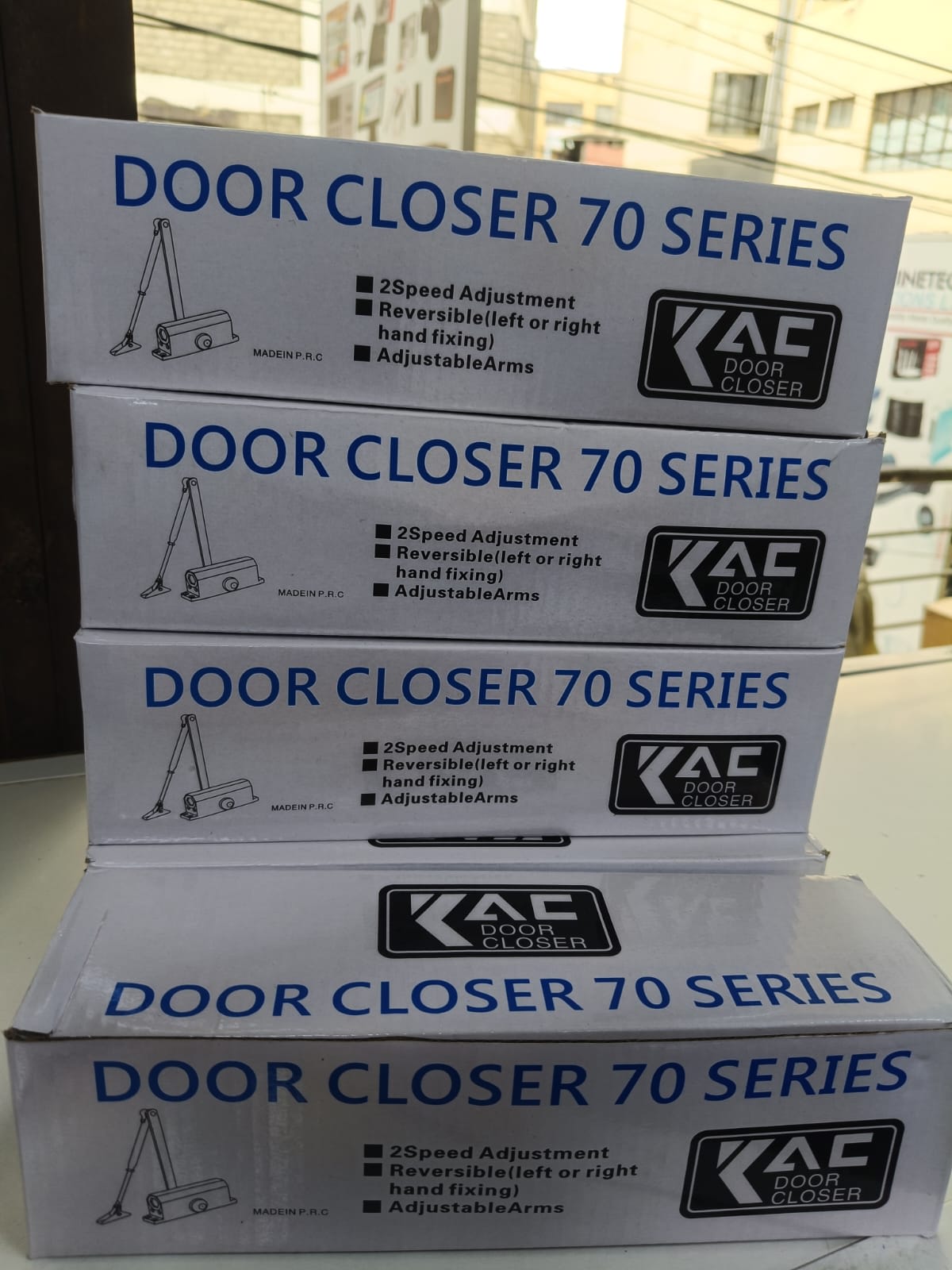
| Door closer, 70 series | 1 | KSh 1,650 | KSh 1,650 |
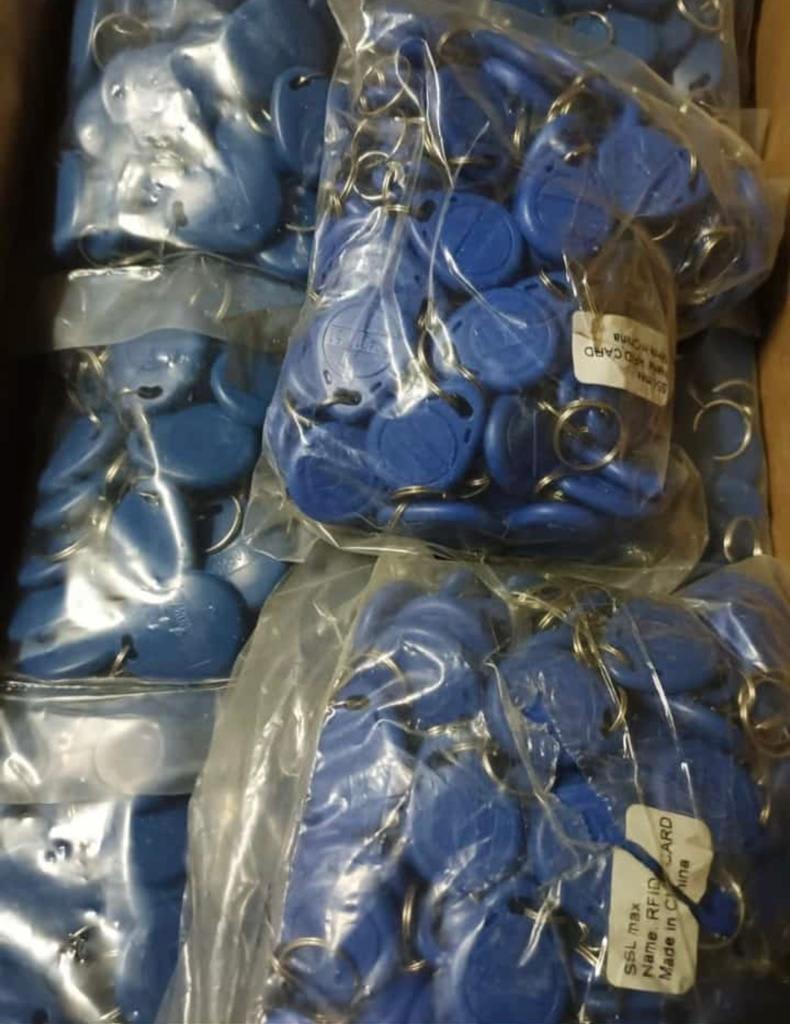
| RFID proximity key fobs | 10 | KSh 100 | KSh 1,000 |
| 6-core cable, 100 m reel | 1 | KSh 1,500 | KSh 1,500 |
| Subtotal (parts) | KSh 27,850 |
Not included in the subtotal:
The kit above is a sensible middle. These swaps move the total up or down.
| Swap | Price | Change to KSh 27,850 | When it makes sense |
|---|---|---|---|
| No Touch infrared exit sensor instead of the metallic button | KSh 1,700 | +KSh 800 | Clinics, kitchens, labs and washrooms where people should not touch a button |
| 12 V 3 A open power supply instead of the boxed 1 A unit | KSh 1,800 | −KSh 2,700 | Internal doors where releasing during an outage is acceptable, or circuits already on a UPS |
| Heavy-duty hydraulic door closer instead of the 70 series | KSh 3,500 | +KSh 1,850 | Heavy or busy doors such as main entrances |
| ZKTeco K40 instead of the F18 | KSh 9,000 | −KSh 5,000 | Mainly an attendance clock; it is rated 12 V 1.5 A, so it needs its own adapter or a bigger supply than the 1 A box |
| Hikvision DS-K1T342MFX face terminal instead of the F18 | KSh 21,000 | +KSh 7,000 | Face, fingerprint, card or PIN at the same door; comes with its own 12 V adapter |
Card frequency matters when you buy fobs. The F18 ships with an EM (125 kHz) card, while the Hikvision terminal reads 13.56 MHz M1 cards. Tell us which reader you have when ordering fobs so the two match.
A fail-safe lock releases when it loses power. A fail-secure lock stays locked when it loses power and needs a key, or power restored, to open. A magnetic lock is fail-safe by design. It is an electromagnet, so no current means no holding force: cut the power and the door opens to a push.
That is why maglocks are the usual choice on doors people may need to escape through, and it is also why backup power matters. Without a battery, every KPLC outage leaves the door free to open until power returns. With the boxed supply and a charged battery, the lock keeps holding and the reader keeps working through the outage.
Fail-secure devices, such as electric strikes or bolt locks set to fail-secure, suit cash offices, stores and server rooms where an open door during an outage is the bigger risk and nobody can be trapped behind it. They are not in our online catalogue at the moment, so ask us if your door needs one.
A door on an escape route must open from the inside without a code, card or finger. The exit button does that in daily use. The break glass is the backup, and how it is wired matters: it should break the power line feeding the magnetic lock directly, not just send a signal to the reader. That way breaking it releases the door even if the reader has frozen or the exit button has failed. Mount it on the inside next to the door, where anyone can reach it.
If the building has a fire alarm panel, ask your installer to link it so that maglocks on escape routes lose power when the panel goes into alarm. Our fire alarm guide for businesses covers the panel side. And never add a padlock, chain or barrel bolt to a maglocked exit door for extra security; it defeats the point of a fail-safe lock.
The boxed 12 V 1 A unit in the parts list outputs 13.8 V DC, holds a 12 V 7 Ah battery inside its enclosure and charges it, has a front tamper switch, and accepts mains input from 90 to 264 V AC, which helps on sites where voltage dips. When mains fails, the battery takes over without the door releasing.
How long it lasts depends on what the lock and reader draw. Read the current on each device's label or datasheet, add them up, and keep the total comfortably below the supply's 1 A rating. As a rough guide, runtime is battery capacity divided by load: a 7 Ah battery feeding a 0.5 A load gives about 14 hours on paper, and less in practice as the battery ages. If your total load is close to 1 A, use a larger supply.
The 12 V 3 A open unit is good value where battery backup is not needed. Its listing gives an adjustable 12 to 15 V output, short-circuit, overload and over-voltage protection, and a two-year warranty. It has no battery charging, so on its own the door will release in every outage.
Fobs and cards are cheap at KSh 100 each and fast to use, and a lost fob is deleted from the reader in a minute. The weakness is that a fob can be lent. Fingerprint means nothing to lend or lose, which is why most small offices choose a reader like the F18 and keep a few fobs for visitors or staff whose prints read poorly. Face recognition suits sites where hands are dirty or worn from work, or where you want touch-free entry.
For more than one door, a controller and software start to make sense; our office door access control guide covers that step up, and the apartments and estates guide covers residents, gates and shared entrances. To price your own door, send a photo of both sides on WhatsApp at +254 718 811 661 or use the contact page, and browse the rest of the access control range.
Our one-door parts list with a ZKTeco F18 reader, 280 kg magnetic lock, exit button, break glass, key switch, boxed power supply, door closer, ten fobs and cable comes to KSh 27,850. The battery, any bracket and installation labour are extra.
A magnetic lock is fail-safe: it releases when power is lost. That is why it needs a power supply with battery backup if you want the door to stay locked during outages.
The break glass is the backup way out if the reader or exit button fails. Wired to cut power to the lock directly, it releases the door even if the electronics have stopped working.
No. The fob and reader must use the same card type and frequency, for example EM 125 kHz for the ZKTeco F18 or 13.56 MHz M1 for the Hikvision face terminal. Tell us your reader model when ordering.
We install in Nairobi. Parts are delivered anywhere in Kenya for a flat KSh 300 with cash on delivery; for installation in other towns, call or WhatsApp us to discuss your site.
Access Control Systems
KSh 14,000
Access Control Systems
KSh 2,000
Access Control Systems
KSh 900
Access Control Systems
KSh 1,000KSh 1,200
Access Control Systems
KSh 1,300
Access Control Systems
KSh 4,500
Access Control Systems
KSh 100
Access Control Systems
KSh 1,650