
Access Control Systems
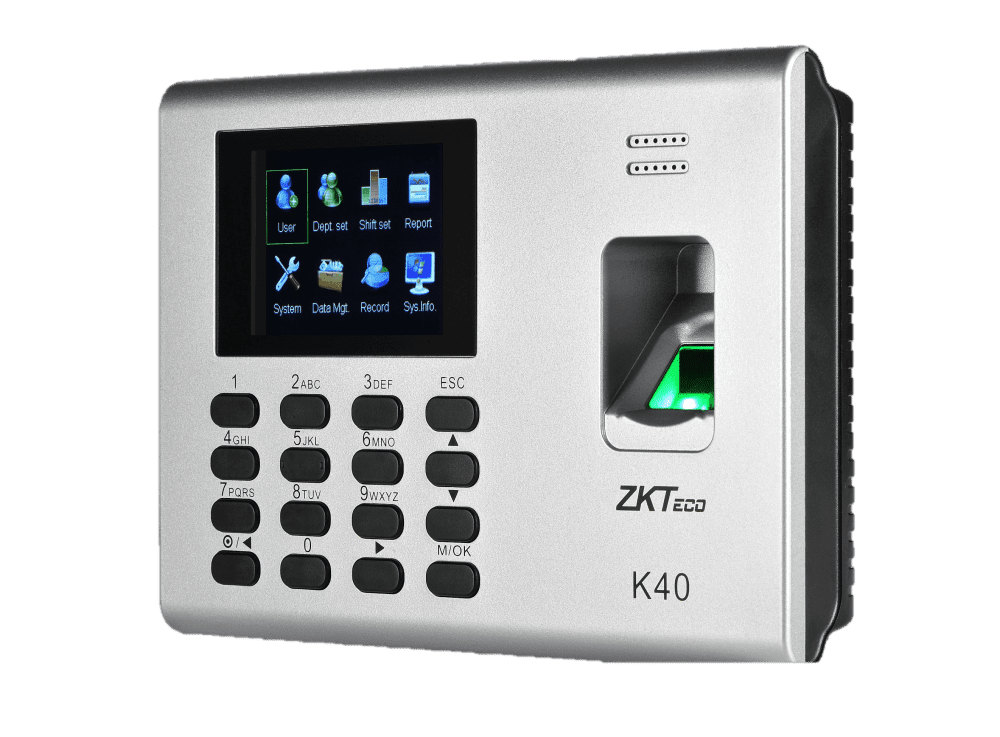
zk k40
KSh 9,000
KSh 300 delivery anywhere in Kenya · Cash on delivery
Every fingerprint and face attendance terminal we stock, with its exact price, what it stores, how it connects, and which kind of workplace it suits.
By Giga Team Solutions · Updated · 9 min read
Biometric attendance machines in our shop range from KSh 9,000 for the ZKTeco K40 fingerprint clock to KSh 89,000 for the Suprema BioStation L2. Most small and medium Kenyan businesses end up somewhere between KSh 9,000 and KSh 21,000. The difference in price buys you face recognition, more storage, better fake-finger detection, weatherproofing or wireless connectivity, and it is worth knowing which of those you actually need before you pay for it.
This page compares the specific models we sell, using the specifications on each product listing. If you want the general picture first, how attendance systems work and what reports they produce, read our overview of biometric time attendance systems and come back here to pick a machine.
| Model | Identifies by | Stores (per listing) | Connects by | Price |
|---|---|---|---|---|
| ZKTeco K40 | Fingerprint; ID card optional | 1,000 fingerprints (2,000 expandable), 80,000 logs | Network (TCP/IP), USB flash disk; built-in backup battery | KSh 9,000 |
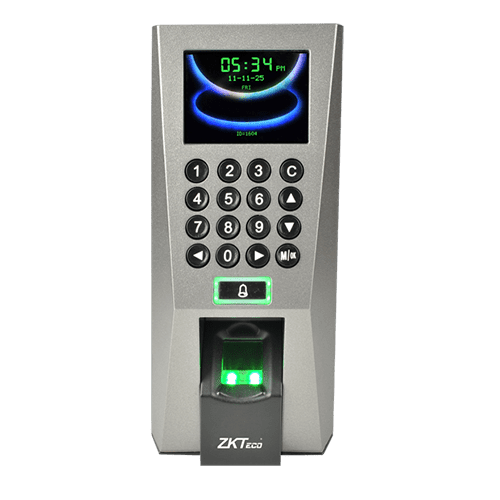
| ZKTeco F18 | Fingerprint and/or card | 3,000 fingerprints, 5,000 cards, 30,000 transactions | Ethernet, serial; lock output | KSh 14,000 |
| HID DigitalPersona 4500 | Fingerprint (USB reader) | Held by the PC software | USB to a computer | KSh 14,999 |
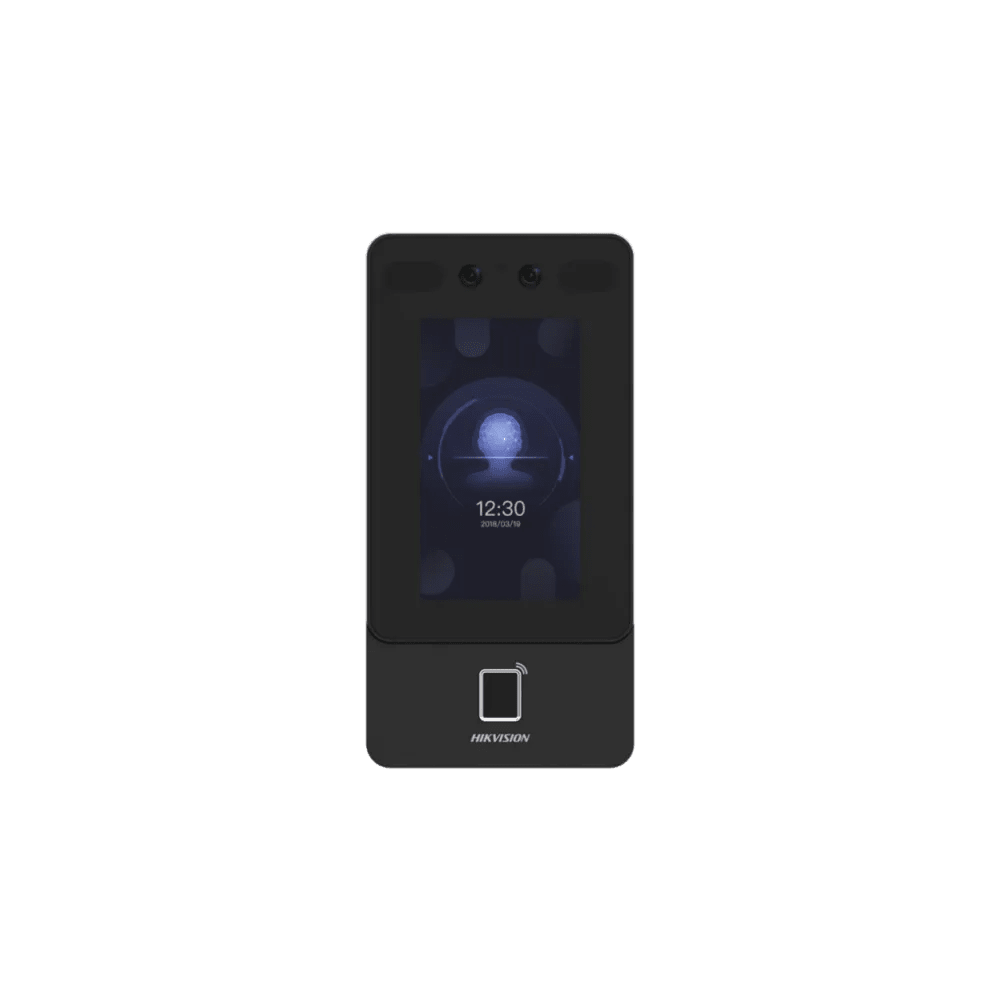
| Hikvision DS-K1T342MFX | Face, fingerprint, card, PIN | 1,500 faces, 3,000 fingerprints, 3,000 cards, 150,000 logs | Ethernet, RS-485, Wiegand, USB | KSh 21,000 |
| ZKTeco SpeedFace-V5L | Face, fingerprint, card, PIN | 6,000 faces, 6,000 fingerprints, 10,000 cards, 200,000 logs | Ethernet, optional Wi-Fi, RS-485, Wiegand | KSh 40,000 |
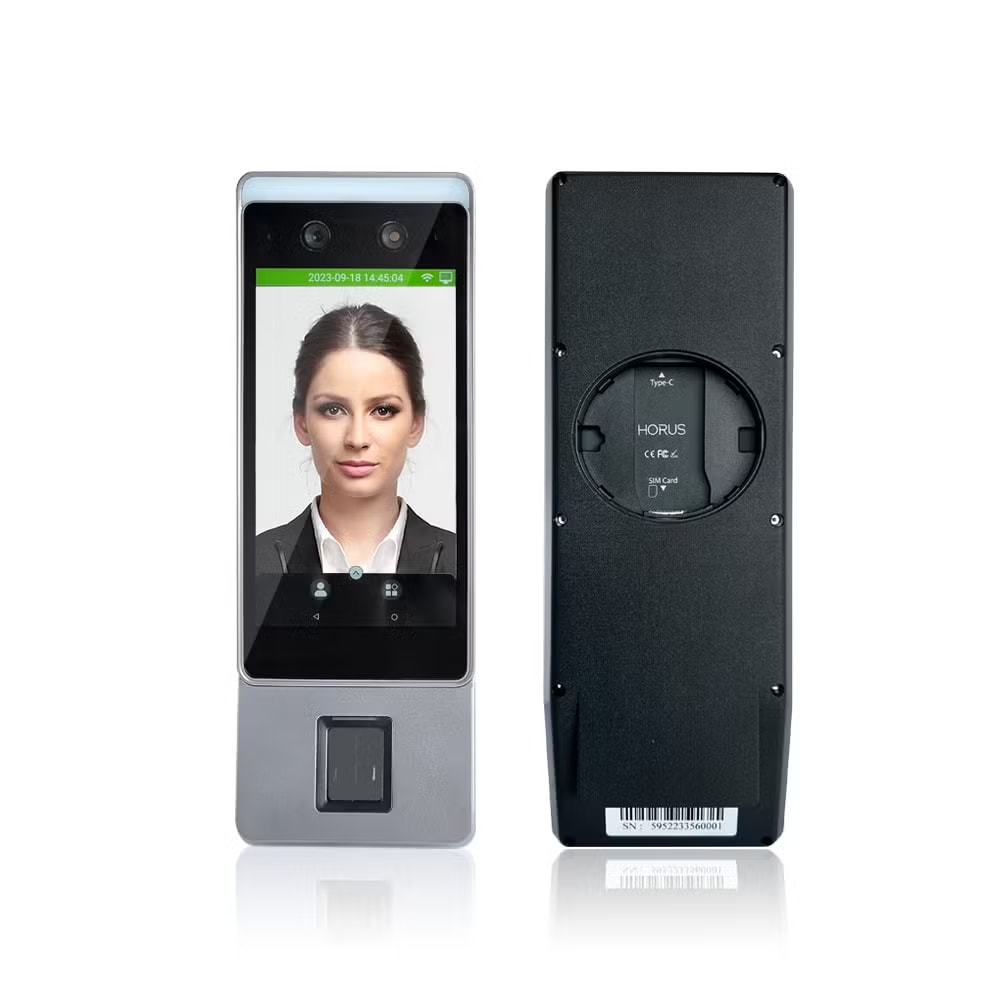
| ZKTeco Horus E1-RFID | Face, card | 6,000 faces (10,000 optional), 100,000 transactions | Wi-Fi, 4G, Bluetooth, USB; rechargeable battery | KSh 44,500 |
| Suprema BioEntry P2 | Fingerprint, 125 kHz and 13.56 MHz cards, NFC | Managed in Suprema's software | TCP/IP, RS-485, Wiegand, OSDP | KSh 67,000 |
| Suprema BioEntry W2 | Fingerprint with live-finger detection, dual-frequency cards | Managed in Suprema's software | TCP/IP with PoE, RS-485, Wiegand; IP67, IK09 housing | KSh 80,000 |
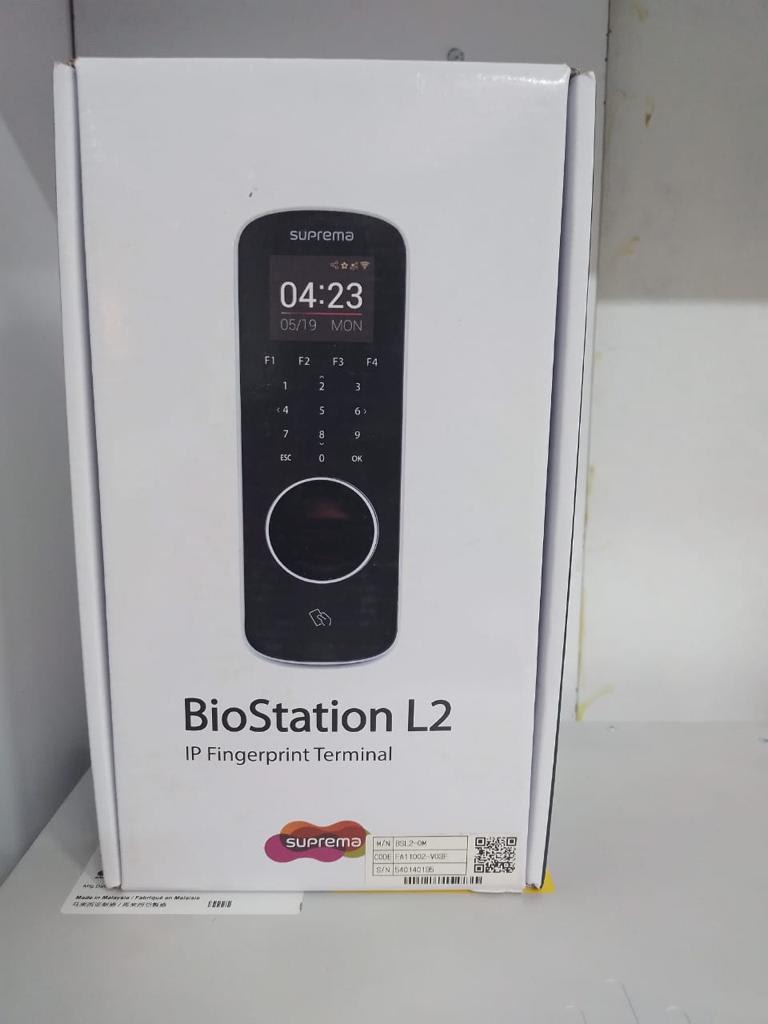
| Suprema BioStation L2 | Fingerprint with live-finger detection, card (EM or MIFARE version) | Up to 500,000 users, 1,000,000 text records | Ethernet, RS-485, Wiegand | KSh 89,000 |
One honest note on the HID DigitalPersona: it is a desktop USB fingerprint reader, not a wall-mounted clock. It works with software on a computer, such as a payroll or HR package that supports it, or for fingerprint log-in. If your software vendor asks for a DigitalPersona reader, this is the one; if you want staff to clock in at the door, choose a terminal instead.
Storage capacity is rarely the limit. Even the K40 holds 1,000 fingerprints. What decides the right machine is the kind of hands and faces at your site, whether the device also has to control a door, where it will be mounted, and whether there is a network to connect to.
| Site | Good fit | Why |
|---|---|---|
| Shop, salon, clinic or small office with one entrance | ZKTeco K40, KSh 9,000 | Fingerprint only, simple USB or network download, and a built-in battery so it keeps logging during KPLC outages |
| Office where the same device should also lock the door | ZKTeco F18, KSh 14,000, or Hikvision DS-K1T342MFX, KSh 21,000 | Both have lock control and exit-button inputs; see our one-door access control kit for the rest of the parts |
| Construction, workshops, factories, cleaning or farm staff | Hikvision DS-K1T342MFX or ZKTeco SpeedFace-V5L | Face recognition works when fingerprints are worn, cut, dusty or wet |
| Larger office or factory with shift changes | ZKTeco SpeedFace-V5L, KSh 40,000 | Four times the face storage of the Hikvision, face plus fingerprint, and anti-spoofing against photos, videos and masks |
| Field teams, several sites, or no fixed network | ZKTeco Horus E1-RFID, KSh 44,500 | Portable, battery powered, uploads over Wi-Fi or 4G; can record location where the positioning feature is enabled |
| Outdoor gate or exposed wall | Suprema BioEntry W2, KSh 80,000 | IP67 and IK09 rated housing, powered over the network cable |
| Larger organisations running Suprema's BioStar 2 platform | Suprema BioStation L2, KSh 89,000, or BioEntry P2, KSh 67,000 | Live-finger detection, multi-door expansion over RS-485, job-code keys on the L2 |
Think about the queue as well as the headcount. If fifty people arrive within ten minutes of a 7:30 AM shift and each takes a couple of seconds to place a finger or face the camera, one machine will cope; if two hundred arrive in the same window, plan a second machine at a second entrance.
Fingerprint is the cheapest way to stop buddy punching, where one employee clocks in for another. It struggles with workers whose prints are worn by cement, chemicals or manual work, and with wet or very dry fingers. Enrol two fingers per person so there is a fallback.
Face recognition is touch-free, quick at a busy entrance, and does not care about the state of someone's hands. The Hikvision terminal lists recognition from 0.3 to 1.5 metres and support for masked faces; the SpeedFace-V5L and Horus E1 list anti-spoofing against printed photos, videos and 3D masks. Mount face terminals out of direct sunlight, which can wash out the camera.
Cards and fobs are fast and cheap but can be lent, so on their own they do not prove who was present. Most terminals here accept cards as a backup for the few staff whose fingerprints will not read. Check the card frequency: EM 125 kHz and 13.56 MHz MIFARE cards are not interchangeable, and the BioStation L2 comes in separate EM and MIFARE versions.
The machine records who verified and when. Turning that into hours, lateness and overtime is the job of the attendance software, and the output is usually an Excel or CSV report that your payroll package or accountant imports. Before buying, ask three questions:
Under section 74 of the Employment Act, employers must keep employee records and produce them to a labour officer on request, and records covering the previous 36 months can be demanded. Attendance logs are useful evidence for that duty, but the Act does not require you to use a clock-in machine. Whatever system you choose, keep exported reports backed up for at least that period rather than relying only on the memory inside the terminal.
Fingerprints and face templates are personal data, so the Data Protection Act, 2019 applies to how you collect and keep them. As reported for workplace CCTV, the ODPC expects businesses to register where required and to tell people their data is being collected. In practice that means, in general:
This is general information, not legal advice. If you are unsure, check with the ODPC or a lawyer.
To check which terminal fits your staff numbers and site, send us your details on WhatsApp at +254 718 811 661 or through the contact page, or browse the full biometrics range.
The ZKTeco F18 fingerprint and card reader is KSh 14,000 in our shop. It stores 3,000 fingerprints and can also control a door lock.
The ZKTeco K40 is KSh 9,000. It holds 1,000 fingerprints, keeps 80,000 logs, downloads by network or USB flash disk and has a built-in backup battery.
Our face terminals start at KSh 21,000 for the Hikvision DS-K1T342MFX, then KSh 40,000 for the ZKTeco SpeedFace-V5L and KSh 44,500 for the portable ZKTeco Horus E1-RFID.
We stock the Suprema BioEntry P2 at KSh 67,000, the outdoor BioEntry W2 at KSh 80,000 and the BioStation L2 at KSh 89,000. They suit larger sites running Suprema's BioStar 2 software.
No. Section 74 of the Employment Act requires employers to keep employee records and produce them to labour officers, and attendance logs help with that, but the Act does not require a particular machine.
Access Control Systems
KSh 9,000
Access Control Systems
KSh 14,000
Access Control Systems
KSh 21,000KSh 22,000
Access Control Systems
KSh 40,000KSh 41,500
Access Control Systems
KSh 44,500KSh 46,000
Access Control Systems
KSh 89,000
Biometrics
KSh 80,000
Biometrics
KSh 67,000