
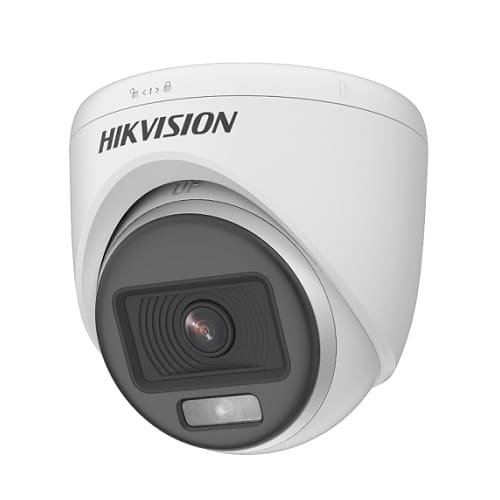
CCTV Cameras
Hikvision ColorVu 1080p
KSh 3,400KSh 3,500
KSh 300 delivery anywhere in Kenya · Cash on delivery
Salt air, humidity and strong sun shorten the life of CCTV equipment at the coast. This guide covers the hardware choices, cleaning routine and remote-viewing setup that hold up in Nyali, Diani, Kilifi and Malindi.
By Giga Team Solutions · Updated · 8 min read
A CCTV system that works for years in Nairobi can start failing within a season or two in Mombasa. The cameras are the same; the air is not. Salt carried off the ocean settles on every exposed surface, humidity gets into anything that is not properly sealed, and the afternoon sun bakes housings and cable jackets. Many coastal CCTV faults are not camera failures at all, but rusted brackets, green connectors and water in a junction box. This guide is about building a system for those conditions, whether it is a house in Nyali, an apartment block in Bamburi or a holiday home in Diani that you mostly watch from your phone.
It helps to know where the damage happens, because it is rarely where people expect.
Properties right on the beachfront in Nyali, Bamburi, Shanzu, Mtwapa or Diani take the worst of this. A few kilometres inland the effect is milder, but humidity is still high across the coast, so sealing matters everywhere.
None of this is exotic equipment. It is mostly the ordinary parts, chosen and fitted with the coast in mind.
| Part | What to use at the coast | Why |
|---|---|---|
| Camera housing | IP66 or IP67 rated, metal or UV-stable plastic | IP66 resists strong water jets; IP67 also handles short immersion. Both keep dust and driven rain out. |
| Screws and wall plugs | Stainless steel screws, nylon plugs | Plated screws rust and stain the wall within months near the sea. |
| Cable joints | Sealed junction box behind every outdoor camera, with cable glands | Keeps the RJ45 or BNC joint out of salt spray and dew. |
| Cable | Outdoor-rated, UV-resistant jacket, in conduit where exposed | Indoor PVC cable cracks in direct sun, then lets water in. |
| Conduit entry | Enter from below, with a drip loop | Water runs along a cable; a loop lets it drip off before the joint. |
| Recorder location | Closed indoor cupboard, away from windows, ventilated | Less salt dust and heat on the electronics. |
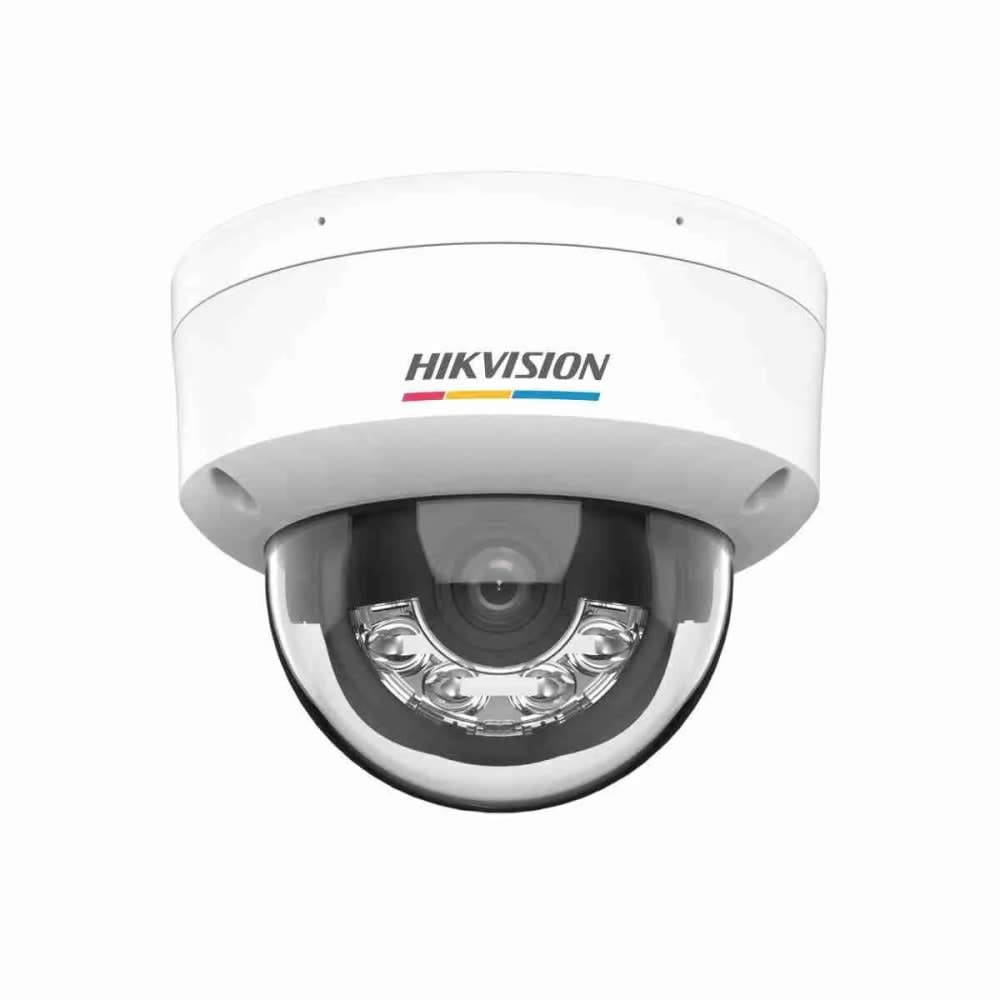
On cameras, the Hikvision ColorVu 1080p (KSh 3,400) is IP67 rated and gives a colour picture at night using a white light rather than infrared. It is an HD analogue camera, so it records to a DVR, not to an NVR. If you want an IP system with phone viewing through Hik-Connect, the Hikvision 4MP ColorVu IP bullet camera (KSh 8,200) runs on PoE and records to an NVR such as our Hikvision 16-channel NVR (KSh 26,000). Check the IP rating on the datasheet of any camera before mounting it facing the sea. Our post on how to choose a CCTV camera explains resolution, lens and night vision choices in more detail.
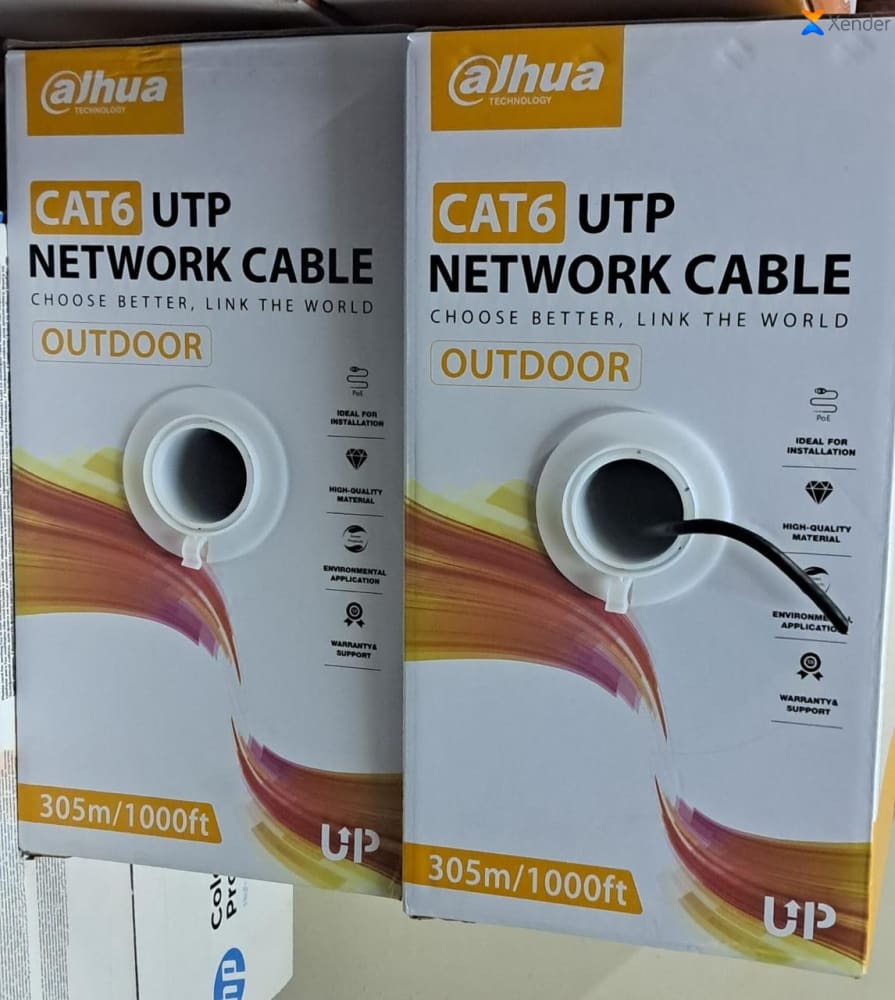
For outside runs, use cable sold for outdoor use. The Dahua outdoor Cat6 UTP cable (KSh 15,000 per 305 m drum) has a UV-resistant black outer sheath meant for outdoor runs. Even outdoor cable lasts longer in conduit where it crosses an open roof or wall.
Coastal sun causes two separate problems: heat and glare.
Heat builds up inside a camera that sits in full afternoon sun on a west-facing wall. Mount under the roof overhang where you can, or fit a sun shield. Cameras run within a stated temperature range, so a shaded position is kinder to the electronics over the years than one in direct sun all afternoon.
Glare is a placement problem. A camera pointing towards the sea or towards the low morning or evening sun will show silhouettes against a bright background, with faces too dark to recognise. Point gate cameras along the line of approach rather than straight out into the sky, and look at the picture at different times of day before fixing the bracket for good. White walls and white sand also reflect a lot of light, which can wash out a cheap camera at midday.
Many coastal properties are empty for weeks at a time, with the owner in Nairobi or abroad and a caretaker on site. For these, the CCTV system is less about recording evidence and more about being able to check the house from a phone. That changes the priorities.
If the house is let to guests, the recording is no longer purely household use, and data protection rules may apply. Our CCTV law guide covers the basics; check with the ODPC for your situation.
Maintenance is what separates a coastal system that lasts from one that slowly goes blind. A simple routine a caretaker or askari can follow:
If a camera does start misbehaving, our CCTV troubleshooting guide goes through the usual causes in order.
We are based in Nairobi, at White Angle House, Room 62, Kenneth Matiba Road. Orders to Mombasa Island, Likoni, Mtwapa, Kilifi, Malindi or the South Coast are delivered for a flat KSh 300 per order, typically within 24 to 48 hours, and you pay cash on delivery. Our shipping page has the details. Most products carry the manufacturer's warranty, and returns are accepted within 7 days.
We supply and install CCTV in Mombasa and along the coast. Call or WhatsApp us on +254 718 811 661 to discuss your site and get a quote. Photos of the property, the distances involved and how close it is to the beach help us advise on the right cameras, cable and sealing before anything is sent.
Yes. Delivery anywhere in Kenya, including Mombasa, Kilifi, Malindi and Diani, is a flat KSh 300 per order, typically within 24 to 48 hours, and you pay cash on delivery.
Yes. We install CCTV in Mombasa and along the coast, and anywhere else in Kenya. Call or WhatsApp us on +254 718 811 661 with details of your site for a quote.
Look for IP66 or IP67. Both keep out dust and driven rain; IP67 also handles short immersion. The rating only helps if the cable joint behind the camera is sealed as well.
Wiping the lens glass monthly with a damp soft cloth removes the salt film that makes night footage look foggy. Check connectors and brackets for corrosion every few months.
Yes, as long as the recorder has an internet connection, such as a 4G router, and the router is on backup power. The phone app then shows live and recorded footage from anywhere with data.
CCTV Cameras
KSh 3,400KSh 3,500
CCTV Cameras
KSh 8,200
Computing & Networks
KSh 15,000
Access Control Systems
KSh 8,000
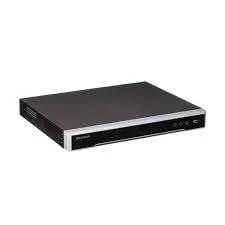
CCTV Cameras
KSh 26,000
CCTV Cameras
KSh 5,300