CCTV for Business in Nairobi: How Many Cameras 2026
How many CCTV cameras does your Nairobi business need in 2026? Camera counts by shop, supermarket, office and warehouse, plus placement, storage and price ranges.

If you run a shop, office, supermarket, restaurant or warehouse in Nairobi, the question is rarely whether you need surveillance — it is how many CCTV cameras you actually need and where to place them. Buy too few and you leave blind spots over the till and the stockroom; buy too many and you waste money on overlapping views and storage you never use. This practical 2026 guide breaks down camera counts by premises type, the coverage points that matter for businesses in Kenya, and how to size your recorder, storage and remote viewing — so your CCTV for business in Nairobi investment actually protects your stock, cash and staff.
Why business CCTV is different from home CCTV
A home system mostly watches gates, the compound and a front door. A commercial system has to do more: protect cash-handling points, monitor inventory, document customer and staff behaviour, and give you usable evidence if there is a dispute, a theft or an insurance claim. That changes both the number of cameras and where they go.
For businesses, three priorities drive the camera count: cash points (tills, POS, cash office), stock and high-value goods, and entry/exit and perimeter. Every other camera is secondary. If you are still deciding on camera type and quality before counting them, start with our guide on how to choose a CCTV camera in Kenya, then come back to plan coverage.
How many CCTV cameras do you need? Counts by premises type
There is no single magic number — it depends on floor area, layout, number of entrances and how much cash or stock you handle. The table below gives realistic starting camera counts we typically recommend for Nairobi businesses in 2026, along with typical Kenyan market price ranges for a supplied-and-installed system. Treat these as guidance, not fixed quotes — final cost depends on camera resolution, cabling distance and brand.
| Premises type | Typical camera count | Key areas to cover | Typical 2026 system price (KES, supplied + installed) |
|---|---|---|---|
| Small shop / kiosk / boutique | 2 – 4 | Entrance, till/POS, sales floor, back store | 25,000 – 60,000 |
| Mid-size retail / hardware / pharmacy | 4 – 8 | Each till, aisles, entrance, stockroom, exterior frontage | 55,000 – 130,000 |
| Supermarket / minimart | 8 – 24+ | Every till, all aisles, cold/high-value section, receiving bay, exits | 140,000 – 450,000+ |
| Office / SACCO / clinic | 4 – 12 | Reception, corridors, server/strong room, parking, each entrance | 60,000 – 220,000 |
| Restaurant / bar / café | 4 – 10 | Cashier, bar, kitchen entry, dining area, store, entrance | 60,000 – 180,000 |
| Warehouse / godown | 6 – 20+ | Loading bays, racking aisles, gate, perimeter, dispatch desk | 120,000 – 400,000+ |
For a deeper breakdown of per-camera and recorder pricing, see our CCTV camera prices in Kenya 2026 guide, and for labour, cabling and call-out expectations read CCTV installation cost in Kenya.
The coverage points that matter most for shops and businesses
Rather than scattering cameras, work through these high-value zones in order. Most theft and disputes happen at predictable spots.
1. Tills and POS points
Every cash register or POS terminal deserves its own dedicated camera angled to capture the cash drawer, the goods being scanned and the customer's hands. This is your single most important business camera — it deters and documents both customer fraud and till skimming.
2. Entrances and exits
Place a camera at each public entrance and staff/back door, mounted to capture clear faces at the height people walk through — not just the tops of heads. A staffed entrance camera also records who came and went, and when.
3. Stockroom, store and receiving area
Shrinkage often happens away from customers — in the stockroom, the goods-in bay or the dispatch desk. Cover the door to your store and the point where deliveries are checked in.
4. Sales floor and aisles
Cover aisles end-to-end so there are no blind corners between shelving. In supermarkets, alternate camera direction down each aisle so a shopper is always facing at least one lens.
5. Exterior, frontage and parking
Outdoor cameras protect your signage, frontage, ATM lobby or parking and capture activity before anyone enters. Use weatherproof (IP66-rated) cameras here. If your premises has its own yard or gate, you may also want to combine this with biometric access control for staff-only areas.
Pro tip: mount the till and entrance cameras so they capture faces at chest-to-head height, not from directly overhead. An overhead "bird's eye" shot proves something happened but rarely identifies who did it. The most useful business footage looks people roughly in the eye from 2.5–3 metres away.
Resolution: what quality should business cameras be in 2026?
For most Nairobi businesses, 2MP (1080p) is the practical baseline and works well for general coverage. Step up to 4MP or 5MP for tills, entrances and any point where you need to read faces, number plates or banknotes clearly. 8MP (4K) is worth it for wide sales floors or warehouses where one camera covers a large area and you may need to digitally zoom into the footage later.
- 2MP (1080p): aisles, corridors, general floor coverage.
- 4MP – 5MP: tills, entrances, cash office, reception — where identification matters.
- 8MP (4K): large open areas, warehouse racking, wide forecourts.
Choosing between the two most common brands in Kenya? Our comparison of Hikvision vs Dahua CCTV explains the differences in features, app quality and value so you can standardise your fleet.
NVR/DVR and storage: how to size your recorder
Your recorder must have at least as many channels as cameras — and ideally room to grow. A business that installs 6 cameras today should buy an 8-channel recorder so there is headroom to add the inevitable extra camera next year.
- DVR records analogue/HD-over-coax cameras (often cheaper, reuses existing coax cabling).
- NVR records IP cameras over network cable, supports higher resolutions and is the more future-proof choice for new commercial installs.
For storage, businesses usually need 30 days of retention — many insurers and disputes look back several weeks. As a rough 2026 rule of thumb for continuous recording:
| Cameras | Resolution | Approx. 30-day storage needed | Recommended HDD |
|---|---|---|---|
| 4 | 1080p | ~2 – 3 TB | 4 TB surveillance HDD |
| 8 | 1080p – 4MP | ~4 – 6 TB | 6 – 8 TB |
| 16 | 4MP – 4K | ~10 – 16 TB | 2 × 8 TB |
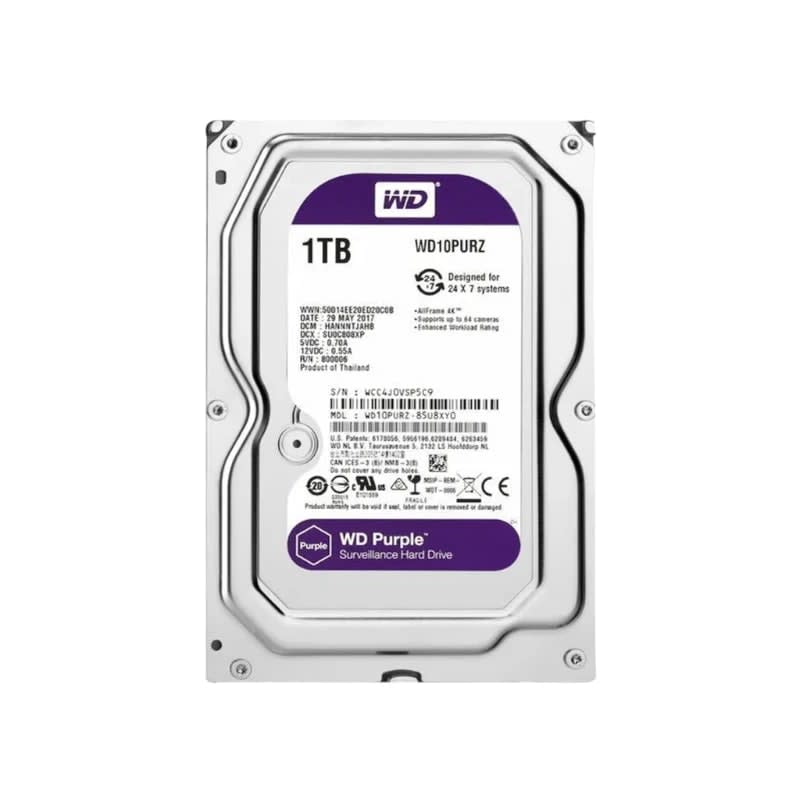
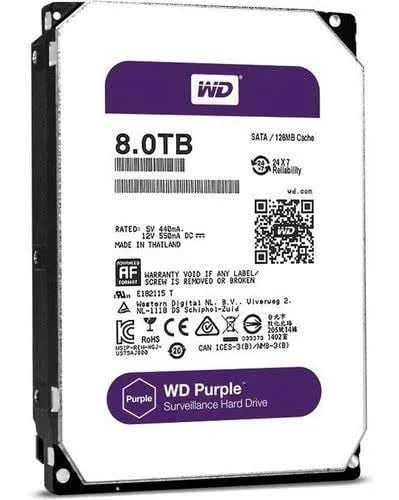
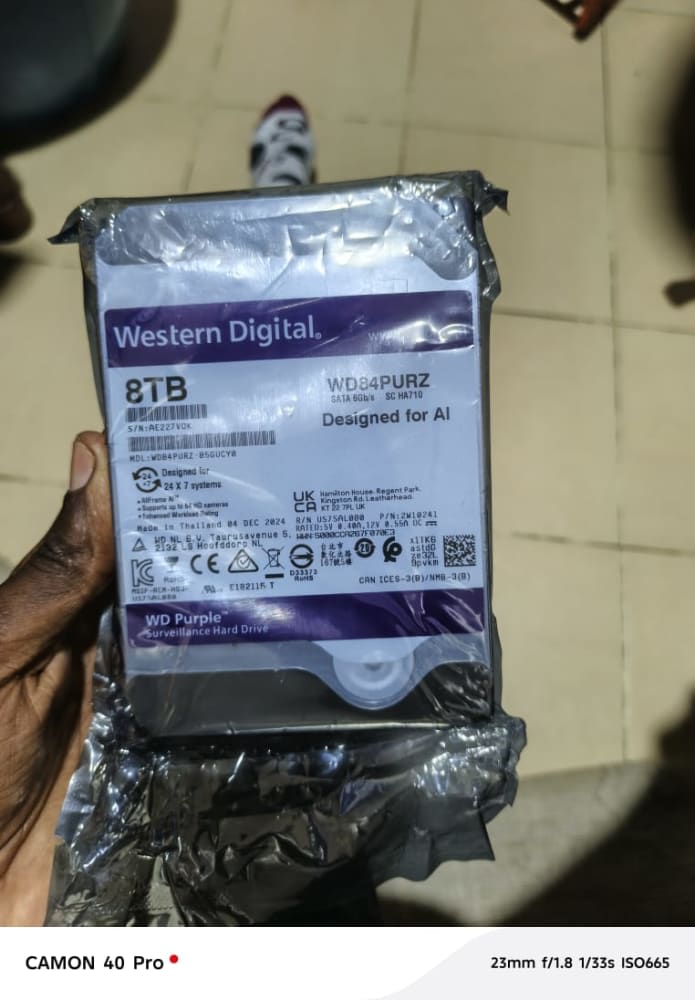
Always use a purpose-built surveillance-grade hard drive rather than a desktop drive — they are rated for 24/7 writing. Enabling motion-based recording or smart event detection can stretch retention significantly.
Remote viewing and smart alerts
For business owners who are rarely on-site, remote viewing is essential. Modern Hikvision and Dahua systems stream live and recorded footage to a free mobile app over your internet connection, so you can check your shop from anywhere. Add a stable router and, ideally, a UPS so cameras keep recording through Nairobi's occasional power cuts. Where mains and reliable internet are a challenge, solar-powered CCTV is a practical option for remote sites and yards.
Smart features now common in 2026 — line-crossing, intrusion zones and human/vehicle filtering — cut down on false alerts so you only get pinged when something genuinely matters.
Deterring employee and customer theft
CCTV reduces shrinkage two ways: visible deterrence and accountability. Position at least one camera so it is obviously watching the till and the stockroom door — visible domes change behaviour. Then make sure footage is actually reviewable: clear, well-lit, correctly timestamped and retained long enough. Pair surveillance with simple till procedures and, for stockrooms or cash offices, restricted-entry office door access control so only authorised staff can enter.
Professional installation matters
Camera placement is where most DIY business systems fail — bad angles, glare, blind spots over the very till you were trying to watch, and undersized storage. A professional survey maps coverage to your actual floor plan and cabling routes. Browse the camera types we stock on our products page and the full CCTV & surveillance category, then let our team size and fit the system through our installation services. Everything we supply is genuine and warranty-backed, with countrywide delivery across Kenya.
Frequently Asked Questions
How many CCTV cameras does a small shop in Nairobi need?
Most small shops are well covered with 2 to 4 cameras: one on the entrance, one on the till, one over the sales floor and, where relevant, one on the back store. A typical supplied-and-installed system falls in the KES 25,000 – 60,000 range in 2026.
Is 1080p enough for a business, or do I need 4K?
1080p (2MP) is fine for general coverage. Use 4MP–5MP on tills and entrances where you must identify faces or read notes, and reserve 4K for large open floors or warehouses where one camera covers a wide area.
How long should business CCTV footage be kept?
Aim for around 30 days of retention. Size your hard drive to your camera count and resolution — for example, roughly 4–6 TB for eight 1080p–4MP cameras recording continuously.
Can I watch my shop cameras from my phone?
Yes. With a stable internet connection, modern systems stream live and recorded footage to a free mobile app, plus smart alerts for motion or intrusion. We configure remote viewing during installation.
Should I choose a DVR or NVR for my business?
For new commercial installs we generally recommend an NVR with IP cameras — higher resolution and more future-proof. A DVR can be the budget-friendly choice if you are reusing existing coax cabling.
Ready to protect your shop, office or warehouse the right way? Talk to our team for a free coverage plan tailored to your premises — call or WhatsApp +254 718 811661, contact us for a site survey, or browse genuine, warranty-backed equipment. We supply, deliver countrywide and install across Kenya, and you pay on delivery after we confirm your order.